

 Our Shared Values
 Our Business
 Our Achievements
 Our Governance
 Our Leadership
 Conservation Management & Monitoring
 Climate Change
 Community Engagement
 Partnerships & Memberships
 Human Rights & Labour
 Responsible Sourcing
 Responsible Production
 Certifications
 Sustainability Report
 Palm-based Food Products
 Other Food Products
 Oleochemicals
 Bioenergy
 Seeds
Seeds Sugar
Sugar Shipping & Logistics
 Food & Nutrition Innovation
 Animal Nutrition
 Press Releases
 Stories
 Meet Our Experts
 In the News
 Publications
 Shareholder Information
 Financial Highlights, Reports & Presentations
 SGX Filings
 Analyst Coverage
 Prospective Suppliers
 Support for Palm Suppliers
 Existing Non-Palm Suppliers
 FAQ
FAQ Graduates & Professionals
 Scholarships
 Internships & Traineeships

Key takeaways:
“People want better products – but they also want safer, cleaner, and more responsible ingredients. That’s the challenge we help solve every day,” said Christopher Lee, Head of Sales and Marketing for Oleochemicals at GAR.
In today’s world of product development, every formulation is a balancing act. Chemists and R&D professionals are expected to deliver on performance, aesthetics, safety, and sustainability – all at once.
A common tool formulators turn to? Fatty esters.
Found in everything from face creams and food supplements to pharmaceuticals and high-performance lubricants, fatty esters play a vital role in shaping how products feel, function, and behave under pressure. But not all esters are created equal – and not every supplier prioritises traceability or renewable sourcing.
Learn what fatty esters are, how they’re made, and where they’re used – especially for formulators seeking ingredients that are both high-performing and sustainable.
What on earth are fatty esters?

A fatty ester is the product of a simple but impactful chemical reaction:
Acid + Alcohol → Ester + Water
(a process called esterification)
This reaction transforms the original fatty acid into a compound with entirely different properties. Think of it like customising the ingredient to behave better – absorbing better, feeling lighter, or improving stability in a formulation.
How do they compare?
Fatty esters sit alongside fatty acids and fatty alcohols as part of a larger ingredient toolkit. Each plays a vital role depending on the product’s function, feel, and end-use.
Rather than replacing fatty acids or alcohols, esters complement them. This gives formulators greater flexibility to meet sensory, stability and sustainability needs.
GAR produces all three ingredient types derived from palm – fatty acids, fatty alcohols, and fatty esters – allowing our customers to select the right building blocks for their formulation.
From nature to innovation: How fatty esters are made
Every ester starts with a simple origin: nature.
At GAR, we source our fatty esters from responsibly grown palm oil – a renewable raw material that offers consistency, performance, and traceability.
How do we go from palm fruit to silky emollient in your hand cream or the lubricant keeping machinery running smoothly? We break it down for you.

Fatty esters can also be made synthetically from petroleum. While some components like alcohols are still derived from petrochemical sources, businesses are increasingly turning to bio-based fatty acid inputs. In ester production, fatty acids make up the bulk of the material required, far more than the alcohol portion. This means the choice of fatty acid feedstock is especially important. Here’s why bio-based inputs are gaining ground:

Renewable inputs
Plant-based fatty acids, such as those from sustainably sourced palm oil, offer a renewable alternative to fossil fuels

Biodegradable
Esters made with natural fatty acids typically break down more easily in the environment

Consumer-friendly
With growing demand for greener, safer ingredients, bio-based esters help meet expectations in personal care, food, and beyond

Traceable and responsible
At GAR, we offer full traceability of the bio-based portion – from plantation to final product – through our vertically integrated supply chain
Inside the molecule: Meet our fatty esters range
No two esters are quite the same – and that’s the point. The structure of each fatty ester determines how it behaves: some glide smoothly on skin, some resist heat and pressure. Others carry nutrients where they’re needed most.
At GAR, we’ve developed a range of palm-based esters tailored for real-world performance across nutrition, personal care, pharmaceuticals, and industrial use. Each line is engineered for a specific function, but all share the same foundation: high-quality, traceable raw materials and a commitment to safer, smarter chemistry.
 2-Ethylhexyl
  Isopropyl (IP) Esters
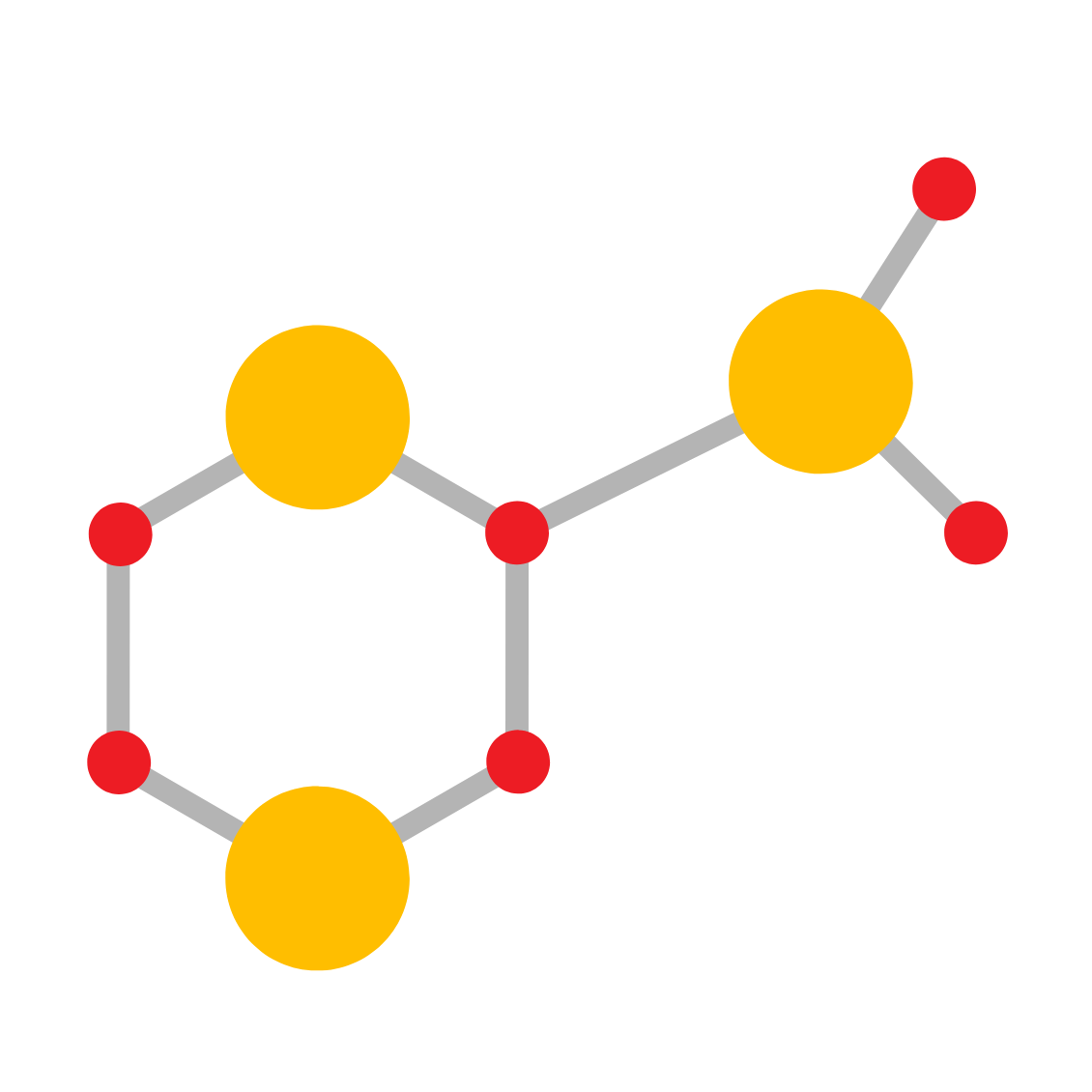 Trimethylolpropane (TMP) Esters
Your go-to gentle nutrition and stable formulations


- What it is: A neutral, odourless ester made from short-chain fatty
acids, often found in coconut and palm kernel oil. - Common uses: Dietary supplements, infant and clinical nutrition,
personal care, fragrance carriers, pharmaceuticals (soft gels, creams, transdermal). - Why it matters: Easily digestible and highly stable, MCT esters are
ideal as carrier oils in health-related products. - GAR range:
- MCT 6040
- MCT C8
Multi-functional esters for comfort, coating, and performance


- What it is: A family of esters formed with 2-ethylhexanol, known for their solvency, emollient properties, and versatile performance across cosmetics and industrial applications.
- Common uses: Personal care (skin care, sunscreens, make-up, fragrance), industrial applications (printing inks, coatings, adhesives, textile auxiliaries, lube & grease).
- Why it matters: Offers excellent spreadability and sensory feel for cosmetics, while delivering lubrication, stability, and formulation flexibility in technical use cases.
- GAR range:
- 2-Ethylhexyl Palmitate
- 2-Ethylhexyl Stearate
- 2-Ethylhexyl Oleate
- 2-Ethylhexyl Cocoate
- 2-Ethylhexyl Laurate
Fast absorbing with a light touch


- What it is: Esters formed using isopropyl alcohol for fast-drying, lightweight formulations.
- Common uses: Body lotions, hair care, bath oils, make-up removers, pigment dispersions.
- Why it matters: Improves absorption and finish, especially in leave-on products.
- GAR range:
- Isopropyl Myristate
- Isopropyl Palmitate
- Isopropyl Laurate
For high-performance lubrication and stability


- What it is: Complex esters made with TMP alcohol – highly branched and multifunctional
- Common uses: Hydraulic oils, gear oils, compressor oil, metalworking fluids, greases
- Why it matters: Exceptional oxidative and thermal stability, excellent lubricity
- GAR range:
- Trimethylolpropane Trioleate
- Trimethylolpropane Tricaprylate/Tricaprate
Expert take: What makes a great fatty ester
We spoke with Christopher Lee, our Head of Sales and Marketing for Oleochemicals to talk about what makes a high-performing fatty ester – and why customers are getting more curious about what’s behind their ingredients.
Q: What are the most common things customers ask about fatty esters?
Christopher: Performance and safety always top the list. For personal care, they want to know: “Will it feel light, will it absorb quickly, will it clog pores?” In food, it’s all about digestibility and compliance. In industrial applications, it’s thermal stability and oxidation resistance. What surprises many is how versatile esters can be across these different contexts when designed right.
Q: What trends are you seeing in fatty ester development today?
Christopher: There’s a clear move towards multi-functional esters. Customers want ingredients that offer more than one benefit – like softness and barrier repair in skincare, or flow enhancement and biodegradability in lubricants. There’s also strong interest in plant-based and palm-derived alternatives to synthetic esters, especially in markets prioritising clean labels and sustainability.
Q: What excites you most about the future of fatty esters?
Christopher: Their versatility. We’re only scratching the surface of what esters can do. With the right innovation, they can bridge the gap between performance and sustainability across so many sectors. From bio-based solvents and skincare, fatty esters are going to play a huge role in how we rethink ingredients – not just for what they do, but how they’re made.
Frequently Asked Questions (FAQs)
Fatty esters are used in:
- Skincare and cosmetics: as emollients, moisturisers, and spreadability enhancers
- Food and nutrition: as carrier oils in soft gels and dietary supplements
- Pharmaceuticals: for drug delivery systems and creams
- Industrial products: in lubricants, metalworking fluids, and biodegradable hydraulic oils
GAR produces four main lines of palm-based fatty esters:
- MCT Esters – for food and personal care
- 2-Ethylhexyl Esters – for cosmetics and industrial coatings
- Isopropyl Esters – for fast-absorbing personal care applications
- Trimethylolpropane (TMP) Esters – for high-performance
Our oleochemical products support clean, high-performance innovations across industries. Dive deeper into what we offer. Explore our oleochemicals portfolio.