

 Our Shared Values
 Our Business
 Our Achievements
 Our Governance
 Our Leadership
 Conservation Management & Monitoring
 Climate Change
 Community Engagement
 Partnerships & Memberships
 Human Rights & Labour
 Responsible Sourcing
 Responsible Production
 Certifications
 Sustainability Report
 Palm-based Food Products
 Other Food Products
 Oleochemicals
 Bioenergy
 Seeds
Seeds Sugar
Sugar Shipping & Logistics
 Food & Nutrition Innovation
 Animal Nutrition
 Press Releases
 Stories
 Meet Our Experts
 In the News
 Publications
 Shareholder Information
 Financial Highlights, Reports & Presentations
 SGX Filings
 Analyst Coverage
 Prospective Suppliers
 Support for Palm Suppliers
 Existing Non-Palm Suppliers
 FAQ
FAQ Graduates & Professionals
 Scholarships
 Internships & Traineeships
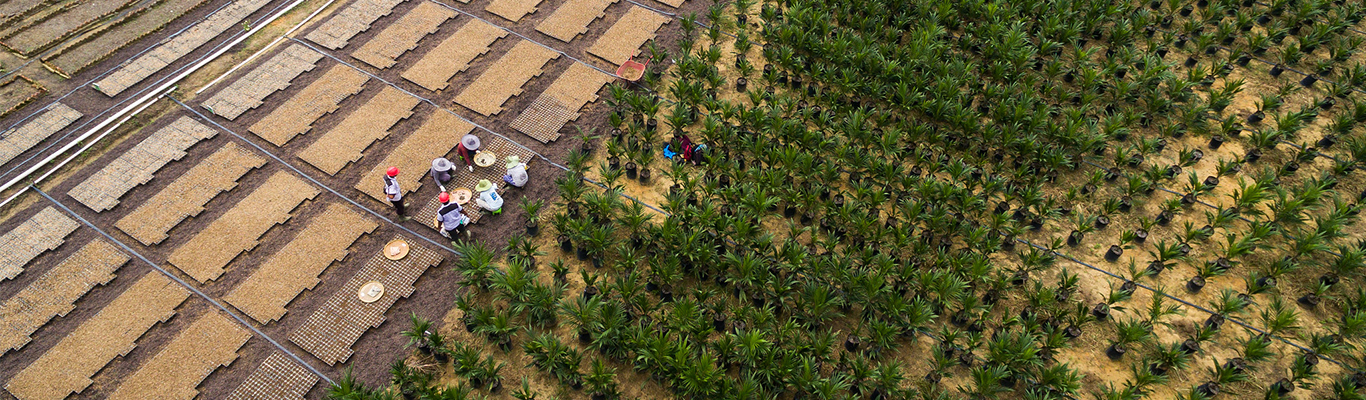

Navigating the EU Deforestation-free Regulation (EUDR) can be daunting, but you don’t have to do it alone. GAR’s capabilities and commitment to sustainability position us to meet the requirements and be ready to support customers, buyers, and suppliers every step of the way.
This article will guide you through what EUDR entails, how GAR aligns with these new regulations, and how we can assist you in meeting them.
Table of contents [show/hide]
What is EUDR? What does it require?
The EU Deforestation-free Regulation (EUDR) is a legislative framework introduced by the European Union (EU) to tackle global deforestation and promote sustainable land use. This regulation aims to prevent the import of commodities and products linked to deforestation into the EU market. It mandates only those commodities and products which comply with stringent environmental and legal requirements are permitted entry.
The core requirements of EUDR include:

Operators1 must provide evidence that their products have a very low risk of coming from recently deforested land. This means the land used for production must not have been cleared of forests since 31 December 2020.

Operators must provide exact GPS coordinates of where their products were grown. This data helps verify that the land use is sustainable and traceable.

The production of these goods must follow the laws of the country where they were made, produced, or sourced. This includes respecting land rights, environmental protection, labour laws, and obtaining consent from local communities.

For every shipment, operators must submit a statement showing they have taken all necessary steps to meet EUDR requirements.

GAR’s commitment to sustainability, ahead of the curve
For GAR, sustainability is not just a buzzword – it’s the foundation of everything we do.
Long before the EUDR came into play, we had already established strong commitments to protect the environment and promote responsible practices throughout our operations. Our dedication to sustainability is encapsulated in our GAR Social and Environmental Policy (GSEP), launched in 2015.
The GSEP is built on the industry-recognised No Deforestation, No Peat, and No Exploitation (NDPE) principles:

No Deforestation
We are committed to making sure that our supply chain does not contribute to deforestation. This means protecting natural forests and other important ecosystems.

No Peat
We avoid developing plantations on peatlands, which are crucial for maintaining biodiversity and acting as carbon sinks.

No Exploitation
We uphold human rights and ensure fair labour practices, respecting the right workers and local communities.
Our GSEP guides our operations and those of our suppliers through four pillars:


Navigating EUDR with GAR
We have robust strategies and systems to help you meet the EUDR requirements. Here’s our comprehensive approach to address each requirement:
- Enabling Deforestation-Free Production
We are dedicated to maintaining a supply chain that does not contribute to deforestation, and our GSEP ensures that our supply chain, including third-party partners, operates deforestation-free. Here’s how we achieve this:
 Deforestation-free Production
All GAR plantations existed before the EUDR’s 31 Dec 2020 cut-off date. This aspect guarantees that our operations meet the EUDR standards from the start.
We use satellite imagery to monitor deforestation alerts. We also conduct field investigations to avoid deforestation in mills and plantations.

 Deforestation-free Production
Empowering suppliers to meet their commitment
We use the NDPE Implementing Reporting Framework to monitor and improve our supply chain’s no deforestation efforts. 93.8% of our CPO* and 91.3% of our PKO** meet the ‘Delivering’ No Deforestation category***.We guide our suppliers on best practices and to establish their own NDPE policies. Over half have assessed valuable ecosystems and carbon-rich forests around their operations.
* CPO: Crude Palm Oil
** PKO: Palm Kernel Oil
*** as of end 2023
- Providing Geolocation Data of Production Areas
Geolocation data is a critical component of EUDR requirements. We have built robust traceability systems, which are reflected in our 99% Traceability to the Plantation (TTP) for our palm supply chain in Indonesia. We are now mapping our global supply chain for palm and non-palm products, including sugar and soy. Here’s what our geolocation efforts mean for you:

Geolocation Data of Production Areas
With decades of investment in traceability, GAR is equipped to give you the peace of mind that our products are responsibly sourced.
- Ensuring Legal Production
Our production processes adhere to all relevant laws and regulations. Here’s how we can help you meet the legal production requirement:
made easy for you
To meet EU requirements, we’re dedicating three refineries to exclusively process EU orders.This effort is part of our bigger commitment to legal and quality standards across our entire supply chain, making sure our products are fully compliant, no matter where they’re produced.

 Legal Production
 Legal Production
As we await further clarity from the EU on legal compliance standards, we are proactively gathering additional documents, policies, and publicly reported information.This groundwork smooths the transition to the new system, making it easy for us to quickly adapt and meet any new requirements.
- Delivering Due Diligence Information
Providing accurate and reliable due diligence information is crucial for EUDR compliance. Our systems are designed to make this process seamless and trustworthy:
 Due Diligence Information
As one of 100 pilot testers of the official EUDR information system, we can offer direct insights into navigating the system.Our active dialogue with regulators and industry stakeholders keeps us informed of the latest EUDR developments, allowing us to guide you effectively.
Due Diligence InformationWe created SmartTrace which provides accurate, trustworthy data required by EUDR. This platform syncs seamlessly with the EUDR system, simplifying the reporting process and compliance.
Our deforestation and traceability policies and implementation have been audited by customers since 2015 and by independent verifiers for the past three years. This rigorous auditing process guarantees that our data is reliable.
Preparing for the future
We are keeping an eye on the development of the EUDR and continually improving our systems to meet future requirements. Here are our next steps:
Participating in Indonesia’s dashboard pilot to improve SmartTrace

Sharing our due diligence system to help you design and build your internal processes

Introducing the SmartTrace to support your compliance efforts

With our system in place and due diligence completed, you’ll be fully prepared to meet EUDR requirements
—–
Ready to get started? Download our brochure for more information on how we can help you navigate EUDR and meet the requirements.
—–
1 An “operator” refers to any individual or company that places relevant commodities or products on the EU market or exports them to the EU.
Unlocking trust: Why SmartTrace is key to reliable and secure traceability data

A guardian of the green: A day in life of GAR’s forest monitoring officer