

 Our Shared Values
 Our Business
 Our Achievements
 Our Governance
 Our Leadership
 Conservation Management & Monitoring
 Climate Change
 Community Engagement
 Partnerships & Memberships
 Human Rights & Labour
 Responsible Sourcing
 Responsible Production
 Certifications
 Sustainability Report
 Palm-based Food Products
 Other Food Products
 Oleochemicals
 Bioenergy
 Seeds
Seeds Sugar
Sugar Shipping & Logistics
 Food & Nutrition Innovation
 Animal Nutrition
 Press Releases
 Stories
 Meet Our Experts
 In the News
 Publications
 Shareholder Information
 Financial Highlights, Reports & Presentations
 SGX Filings
 Analyst Coverage
 Prospective Suppliers
 Support for Palm Suppliers
 Existing Non-Palm Suppliers
 FAQ
FAQ Graduates & Professionals
 Scholarships
 Internships & Traineeships
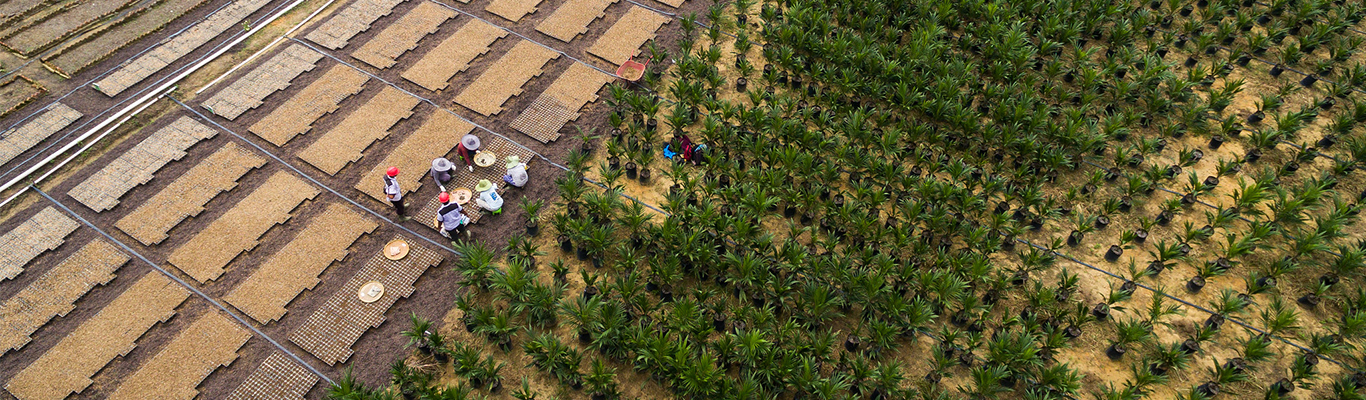

For smallholder farmers, the challenges in palm oil plantations are multifaceted.
Amidst climate changes and other difficulties that limit production capacity, another silent and hidden threat is growing. It’s called Ganoderma.
Ganoderma is a harmful fungus that can seriously damage palm trees and reduce the volume of the harvest. If left unaddressed, it can have a big impact on a plantation’s productivity.
Learn what Ganoderma is, how to spot it, how it affects yield, and what can be done to manage and prevent its spread.
What is Ganoderma? How does it impact palm oil plantations?
Ganoderma spp.1 is a harmful fungus that infects oil palm trees. This fungus causes diseases known as Basal Stem Rot (BSR) and Upper Stem Rot (USR), which attacks the roots, spreads upwards disrupting the tree’s ability to transport water and nutrients, and eventually kills the trees.
There are three types of Ganoderma that can infect oil palms: G. boninense, G. miniatocinctum and G. zonatum. Among these, G. boninense is the most common and dangerous, especially in Southeast Asia.
The fungus thrives in the warm, humid conditions, which are common in palm oil plantations, making it a persistent problem.


Ganoderma boninense belongs to the same fungal family as the medicinal mushroom, Ganoderma lucidum (Reishi). While Ganoderma lucidum is prized for its health benefits, Ganoderma boninense poses a serious threat to palm plantations. This is a reflection of the diverse roles fungi can play in our ecosystem.
Ganoderma can have a devastating impact on palm oil production, especially if detected late. Infected trees produce fewer and smaller fruit bunches, leading to a significant drop in yield:
- Mild infection: Up to 38% yield reduction
- Moderate infection: Up to 80% yield reduction.
- Severe infection: Up to 97% yield reduction.
The potential loss can be costly and harm the plantation’s long-term health if not addressed effectively.
The traditional challenges of controlling Ganoderma
Controlling Ganoderma boninense is challenging. The persistent nature of fungus and favourable conditions of tropical environments make managing this disease particularly difficult.
Here are some traditional challenges faced in combating Ganoderma and why it requires a strategic, informed approach.

Late Detection

Soil-Borne Nature

Limited Fungicide Options

Economic Challenges

Environmental Conditions
Dami Mas seeds: A breakthrough in Ganoderma tolerance
The emergence of Ganoderma-resistant oil palm varieties offers a glimmer of hope for plantation owners battling this disease.
PT Dami Mas Sejahtera, our subsidiary and a leading palm oil seed producer, has introduced DxP Dami Mas Intermediate Ganoderma Resistant (IGR) seeds, a palm oil seed variety that offers moderate resilience against Ganoderma.


“DxP Dami Mas IGR not only has a lower incidence but also delayed onset of infection. While non-IGR plants typically face Ganoderma attacks within the first three years, our seeds show resistance into the sixth year.”
Mohammad Naim, Head of Crop Protection at SMART Research Institute (SMARTRI)
“We studied the trees’ reactions to Ganoderma (phenotyping) and analysed their genes (genotyping) to find special codes linked to disease resistance. The process involved preparing the materials to trigger the disease, observing the trees’ response, and identifying unique genetic markers,” explains Mohammad Naim, Head of Crop Protection at SMART Research Institute (SMARTRI). “These markers, like fingerprints, help identify trees with strong natural defences against Ganoderma. DxP Dami Mas IGR uses six of these markers to build its resistance.”
In non-IGR plants, Ganoderma attacks appear during the immature planting stage, within the first three years. In contrast, the DxP Dami Mas IGR variety shows potential for infection only starting in the sixth year. “Our data shows that Ganoderma attacks on the IGR variety are 50% lower. By the fifth year, the IGR variety remains completely free of infection, while other regular varieties exhibit an infection rate of 3.5 to 4%,” added Naim.
How Dami Mas seeds benefit plantations
Planting DxP Dami Mas IGR seeds can aid in combating Ganoderma while improving the health and productivity of palm oil trees.

Specifically developed with improved resistance to Ganoderma, DxP Dami Mas IGR seeds help in delaying the onset of infection, crucial in maintaining healthy palm trees for a longer period.

Our IGR seeds has shown an 11-12% increase in average production over ten years compared to other regular non-Ganoderma tolerant seeds. They can produce up to 30-35 tonnes of Fresh Fruit Bunches (FFB) and 9 tonnes of Crude Palm Oil (CPO) per hectare each year.

Fewer disease issues mean lower costs for treatments, removing infected trees, and replanting. The higher productivity and yield lead to better economic stability for your plantation.

Healthier palms mean steady production and less need for replanting. This sustainable approach benefits your plantation and helps conserve resources and land.
For maximum efficacy, DxP Dami Mas IGR seeds should be integrated into a comprehensive plantation management plan that includes consistent monitoring, optimised soil conditions, and best agricultural practices.
——
The quality of the seeds is the most critical factor in maximising palm oil yield. That’s why our R&D team develops more resilient and disease-resistant seeds for more productive plantations.
Learn more here about how we sow the seeds of a sustainable future.
——
1Ganoderma spp. refers to multiple species under the genus Ganoderma