

 Our Shared Values
 Our Business
 Our Achievements
 Our Governance
 Our Leadership
 Conservation Management & Monitoring
 Climate Change
 Community Engagement
 Partnerships & Memberships
 Human Rights & Labour
 Responsible Sourcing
 Responsible Production
 Certifications
 Sustainability Report
 Palm-based Food Products
 Other Food Products
 Oleochemicals
 Bioenergy
 Seeds
Seeds Sugar
Sugar Shipping & Logistics
 Food & Nutrition Innovation
 Animal Nutrition
 Press Releases
 Stories
 Meet Our Experts
 In the News
 Publications
 Shareholder Information
 Financial Highlights, Reports & Presentations
 SGX Filings
 Analyst Coverage
 Prospective Suppliers
 Support for Palm Suppliers
 Existing Non-Palm Suppliers
 FAQ
FAQ Graduates & Professionals
 Scholarships
 Internships & Traineeships
You’ve seen the products. Now meet the process.
Palm oil is everywhere – in snacks, soaps, cosmetics, even biofuels. But how many people actually know where it comes from?
It’s not quick or easy. Behind every bottle of cooking oil or bar of soap is a long journey that begins in the soil and depends on people who grow with care and commitment.
From carefully selected seeds to ripe fruit bunches ready for harvest, here’s how oil palm is grown step by step. Along the way, you’ll meet the people and innovations shaping a more sustainable future – because at GAR, we believe how we grow matters just as much as what we grow.
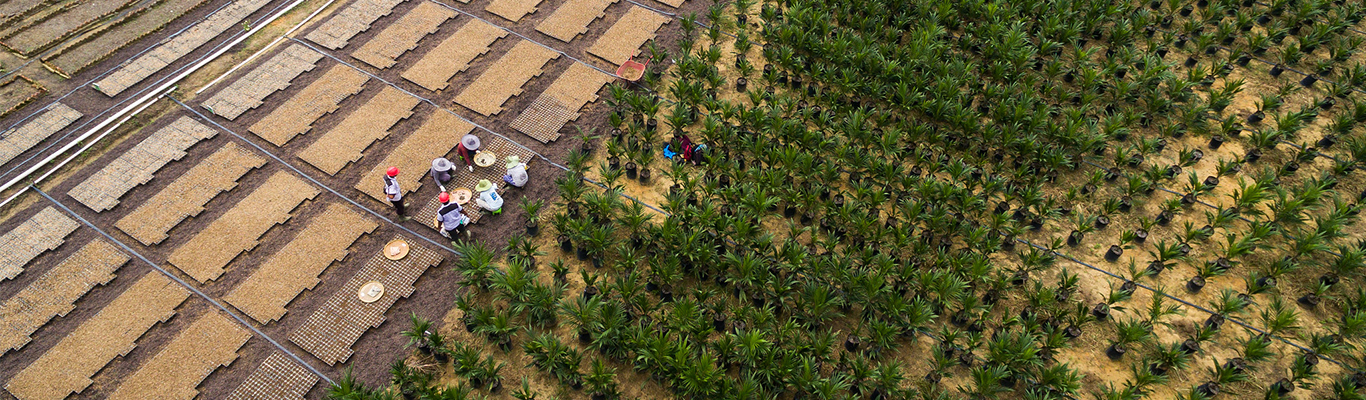
From seed to seedling: The start of the journey

Before a single fruit is harvested, oil palm cultivation starts with the seed. And, a lot of science.
At GAR, we produce our own high-performing planting materials through our SMART Research Institute (SMARTRI), and distribute them via Dami Mas, our certified seed supplier. These seeds are the result of decades of work. The goal: to create palm varieties that yield more oil, resist disease better, and adapt to changing climate and soil conditions.
Each seed is bred for strength and productivity. Once it germinates, it spends 12–14 months in a specialised nursery, where it’s carefully looked after until it grows strong. When a seedling has 12–15 healthy leaves and a solid root system, it’s ready for the next stage.
On the ground with: Reninda Febi Oktavia
Nursery Assistant, Gunung Kombeng Estate, East Kalimantan

For Reninda, every seedling holds potential – and she makes sure it has the best start.
“Each one is a future tree,” she says. “How we care for it now shapes what it becomes.”
Her mornings begin with intentional care: checking for firm stems, healthy leaves, and balanced soil. She waters, shades, feeds, and decides which seedlings are strong enough for the field – and which aren’t.
“We only send out the strongest. If it’s weak now, it won’t survive the plantation.”
What keeps her going? Seeing her nursery plants grow tall and productive in the field. “It’s like watching your work bear fruit – literally.”
Life at the plantation: Growing strong and sustainable

After a year in the nursery, the seedlings are ready for their next chapter – life in the plantation.
Timing is everything. Before the rainy season begins, the seedlings are planted in neat grids – more than 100 trees per football field-sized area. This early planting ensures roots can take hold before the dry season hits. With the right foundation, each tree will produce fruit for up to 30 years.
During those 30 years, we use satellite technology to analyse our plantations and apply fertilisers only where needed. Natural pest solutions like barn owls help us control pests. Our partnership with CIRAD, a French agricultural research institute, brings advanced crop science directly to the field.
Before the first harvest, everything we do – from soil preparation to weeding and water management – shapes the tree’s future. That’s why our agronomy teams are on the ground daily to make sure each tree gets the care it needs to grow strong and sustainably.
On the ground with: Eka Liana Febriandani
Agronomy Assistant, Sungai Rungau Estate, Central Kalimantan

Eka brings both heart and strategy to the field – nurturing growth, guiding people, and getting results.
As an agronomy assistant at GAR, she works with a team responsible for hundreds of hectares. Her days start early, checking palm health, reviewing fertiliser plans, and briefing field workers on daily tasks. Every decision matters in the field, from spotting early signs of nutrient stress to scheduling harvests for peak oil yield.
“It’s a balance of science and people,” Eka says. “You need to know the land and lead the team.”
In a role traditionally dominated by men, Eka stands out not just for breaking barriers, but for delivering results. Her leadership has helped improve productivity while ensuring sustainable practices are followed to the letter.
“I want to prove that women can grow just as much as the trees we care for.”
Harvest time: When fresh fruit bunches come in

After years of careful cultivation, the trees are finally ready to deliver what they’ve been preparing all along – fresh fruit bunches (FFBs), packed with oil-rich palm fruits.
Healthy trees produce about 12 to 14 bunches a year, with every bunch weighing up to 25 kilogrammes. When ripe, the fruits take on a deep reddish-orange hue – rich in beta-carotene, the same pigment that gives carrots their colour. This vibrant signal means it’s time to harvest.
Harvesting oil palm fruit is a skilled task. Workers use long, curved sickles to cut the bunches from towering trees that can reach 40 feet tall. The ripest fruits often detach from the bunch during the cut, which is a good sign, since those fruits carry the most oil. Each fruit can contain up to 25-30% of oil – one reason why oil palm is the most efficient oilseed crop in the world.
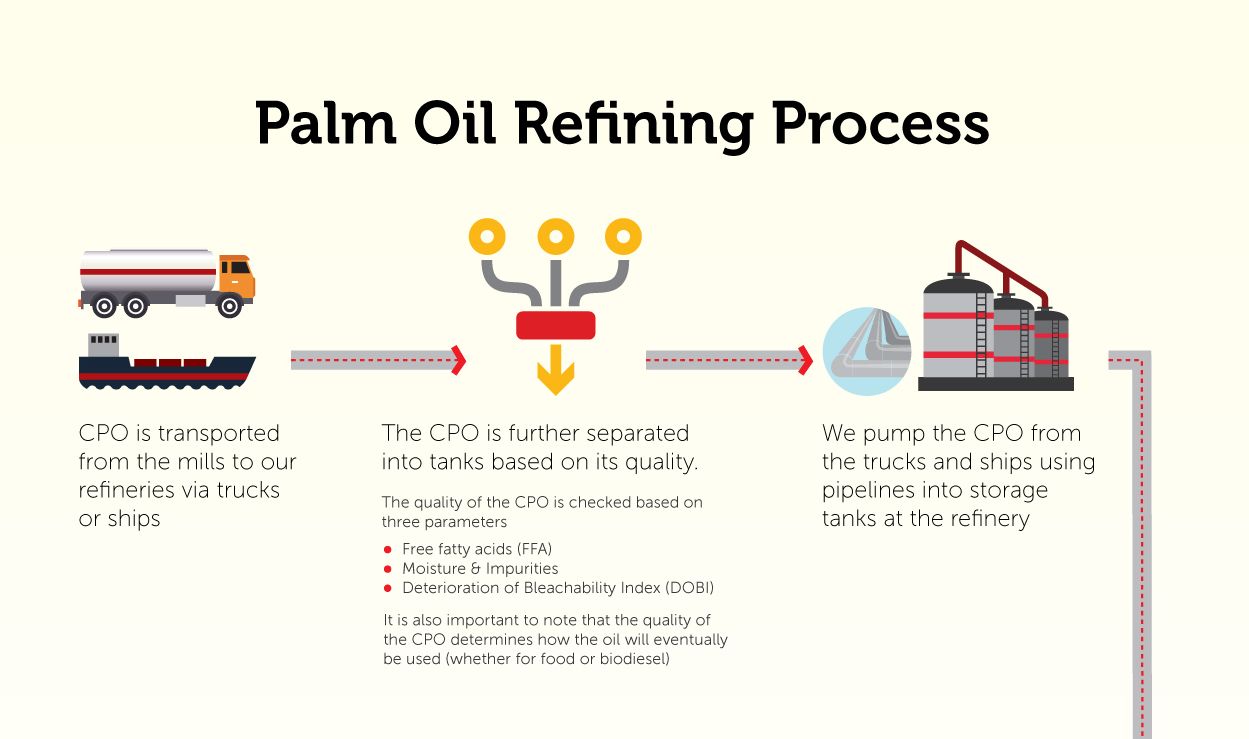
We don’t waste time after harvesting. FFBs are quickly collected and transported to nearby mills – ideally within 24 hours – for high oil yield and top quality. The fruit’s flesh (mesocarp) is pressed into palm oil, while the inner seed (kernel) becomes palm kernel oil. Nothing goes to waste: leftover fibres and shells are reused as organic fertiliser or biomass fuel, helping close the loop on sustainable production.
On the ground with: Luki Nursuhera Dwi Putri
SPO Assistant, Cendana Estate, West Kalimantan


Luki spends her days in the field, clipboard in hand and eyes sharp on the ground. As a Sustainable Palm Oil (SPO) Assistant, she oversees the grading and quality control of every harvest that leaves her estate.
“Harvesting isn’t just about volume, but also getting the quality right,” she says. “Even one unripe bunch can affect the oil yield.”
She inspects each pile for fruit ripeness, checks for loose fruits, and ensures that harvesting teams meet strict standards. Her role sits at the intersection of precision and people – she supports workers, coaches for better practices, and upholds the sustainability standards GAR is known for.
“I love seeing the link between our work and the products people use every day,” Luki adds. “It reminds me that what we do here matters far beyond the plantation.”
From seed to mill, every step in growing palm oil matters. Watch the full journey here.