

 Our Shared Values
 Our Business
 Our Achievements
 Our Governance
 Our Leadership
 Conservation Management & Monitoring
 Climate Change
 Community Engagement
 Partnerships & Memberships
 Human Rights & Labour
 Responsible Sourcing
 Responsible Production
 Certifications
 Sustainability Report
 Palm-based Food Products
 Other Food Products
 Oleochemicals
 Bioenergy
 Seeds
Seeds Sugar
Sugar Shipping & Logistics
 Food & Nutrition Innovation
 Animal Nutrition
 Press Releases
 Stories
 Meet Our Experts
 In the News
 Publications
 Shareholder Information
 Financial Highlights, Reports & Presentations
 SGX Filings
 Analyst Coverage
 Prospective Suppliers
 Support for Palm Suppliers
 Existing Non-Palm Suppliers
 FAQ
FAQ Graduates & Professionals
 Scholarships
 Internships & Traineeships
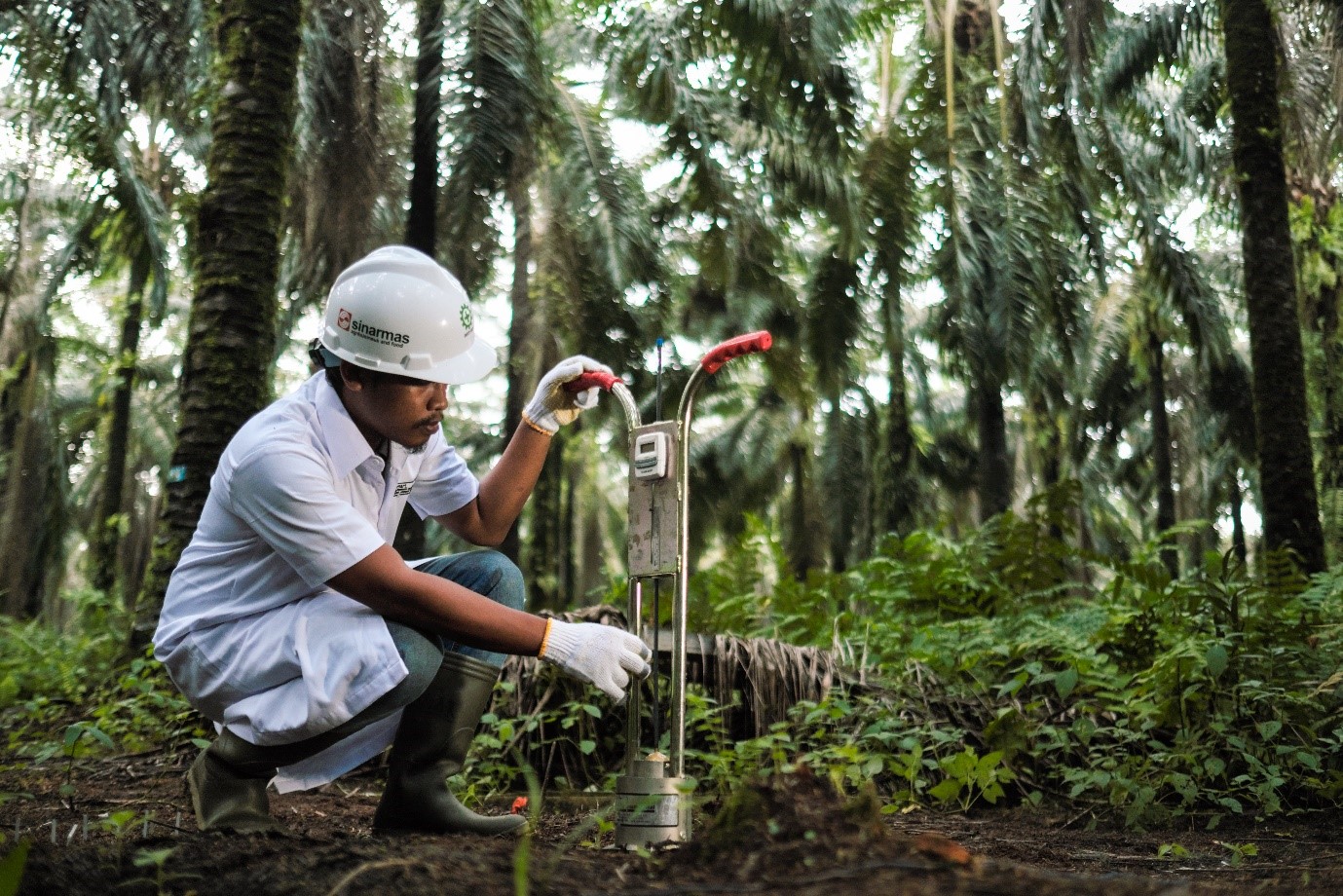
“Biotechnology often sounds complex, but at its core, it’s about working with nature rather than against it,” says Andriessa Prameswara, Production Material Section Head at the SMART Biotechnology Centre. “Our goal is to strengthen plants and soils, so plantations stay productive and resilient over time.”
As sustainability expectations rise, plantations face growing pressure to reduce chemical use while maintaining productivity. In this context, agricultural biotechnology plays a growing role. From pest pheromones that attract specific insects, to biofertilisers that help roots take up nutrients more efficiently, these solutions are practical tools in managing the challenges of modern farming.
How do these biotech solutions perform under real plantation conditions? Why does development take years rather than months? And how do they differ from conventional inputs in practice? The following sections explore these questions through field experience and expert insight.
What is agricultural biotechnology?

At its heart, agricultural biotechnology uses biological processes and living organisms to improve crop health, soil fertility, or pest control. It is not a single technology or tool, but a field of tools designed to support plants and ecosystems in a more natural, integrated way.
In palm cultivation, biotechnology often includes:
• Beneficial microbes that help plant roots extract nutrients from the soil,
• Fungi that help suppress disease-causing organisms,
• Tools that support precise pest management.
These solutions complement existing agronomic practices. They differ from chemical inputs in important ways. Where chemical products may act widely and quickly, biological solutions typically work through interaction with plants and soil. Their effects build over time and contribute to long-term resilience.
Did You Know?
Agricultural biotechnology covers more than biological inputs used in the field. It also includes tissue culture for plant propagation, molecular breeding to improve crop traits, and diagnostic tools that help detect disease and understand plant performance.
In this article, we focus on biological solutions that support soil health, pest control, and crop resilience in plantation conditions.
“Biological products work through interaction,” explains Andriessa. “The microbes we introduce, the existing soil organisms, the plant itself, and the environment all influence the outcome. That is why correct application and patience matter.”
Three biotechnology solutions used in GAR plantations

At the SMART Biotechnology Centre, research and field collaboration have produced three notable innovations now widely used in estates:

One of the biggest threats in many plantations comes from Oryctes rhinoceros, the rhinoceros beetle. Instead of broad-spectrum insecticides, RHINOMAS® uses pheromone technology. It mimics the natural hormone that adult beetles use to group together. The pheromone draws male and female beetles into traps, reducing reproduction in a targeted way.

mycormas® contains indigenous Arbuscular Mycorrhizal Fungi (AMF). These fungi establish a symbiotic relationship with plant roots. They extend the root’s reach into the soil and improve nutrient intake, especially when plants face stress or nutrient limitations.
In practical terms, this means oil palms can access nutrients more efficiently and maintain health under varied soil conditions.

trichomas® is a biofungicide based on beneficial Trichoderma fungi isolated from our plantations. Instead of wiping out all microbes, these fungi help dominate the root zone in a way that suppresses soil-borne pathogens. They do this by producing enzymes and creating a healthier biological balance around root systems.
How biotech becomes a working solution
Turning a concept into a product used on plantations is a long journey. For biological products, development normally spans five to ten years. The process includes:

Collecting promising biological candidates from real plantations

Identifying and optimising in the lab by selecting stable strains and refining formulations

Efficacy testing in controlled environments

Field trials in collaboration with estates and research partners

Evaluating results and refining formulations

Scaling up production and achieving regulatory approval
“Field testing remains the most demanding part,” says Andriessa. “Environmental conditions vary. Microbial populations differ from one soil to another. And users sometimes expect fast results, even though biological effects build gradually.”
Understanding the realities: Can biotech deliver at scale?

Biological solutions often generate interest, alongside questions about consistency, speed, and scalability. In plantations, results depend on how well a solution performs across different soils, climates, and operational conditions. Drawing on years of research, field trials, and close collaboration with estates, Andriessa Prameswara shares what it takes for agricultural biotechnology to move beyond the laboratory and deliver value at scale.
Q: What makes scaling biotech solutions challenging in plantations?
Andriessa: Plantations are living systems. Soil type, climate, existing microbial populations, and crop conditions differ from one estate to another.
Biological products work through interaction, between the introduced microbes, the native soil organisms, the plant, and the surrounding environment. Because of this, results are influenced by many variables.

Q: How do you ensure products like RHINOMAS®, trichomas®, and mycormas® work beyond the lab?
Andriessa: Field validation is central to our work. Development starts with isolating candidates from plantation environments, followed by laboratory optimisation. After that, products go through multiple rounds of field trials in collaboration with estates and research teams.
Feedback from these trials determines further refinement. Only after repeated testing under real plantation conditions do we move toward wider application and production.
Q: Planters often expect fast results. How do you manage expectations with biotech?
Andriessa: Biological products behave differently from chemical inputs. Their effects are often gradual rather than immediate. They build over time as interactions in the soil and plant system stabilise.
Managing expectations means explaining how these products work and what outcomes are realistic. For example, biofertilisers can help improve nutrient uptake and reduce reliance on chemical fertilisers, but they do not eliminate the need for them entirely.
Q: Can biotech reduce reliance on chemical inputs at scale?
Andriessa: Yes, when applied correctly and consistently. Tools like pheromone traps reduce the need for direct insecticide application by targeting pests more precisely. Beneficial microbes help improve soil health and plant resilience, which can lower dependence on certain chemical inputs over time.
That said, biotechnology works best as part of an integrated agronomic approach. It complements conventional practices rather than replacing them outright.
Frequently Asked Questions (FAQs)
Biological inputs work by supporting natural processes in soil and plants, often through beneficial microbes or targeted mechanisms such as pheromones. Their effects build gradually through interaction with existing soil organisms and plant systems.
Chemical inputs, by contrast, typically act faster and more broadly. While they remain important in plantation management, biological inputs help improve soil health and plant resilience over time. In practice, both are used together as part of an integrated agronomic approach.
Every year on 11 Feb, International Day of Women and Girls in Science reminds us that science is shaped by the people behind the work.
In agriculture, women scientists play a vital role in turning research into real-world solutions. Through roles like Andriessa’s, science is used in service of the people who matter most: farmers.
At GAR, we continue to support women in science whose work helps agriculture grow with care and purpose. Read our other stories of women scientists in action.